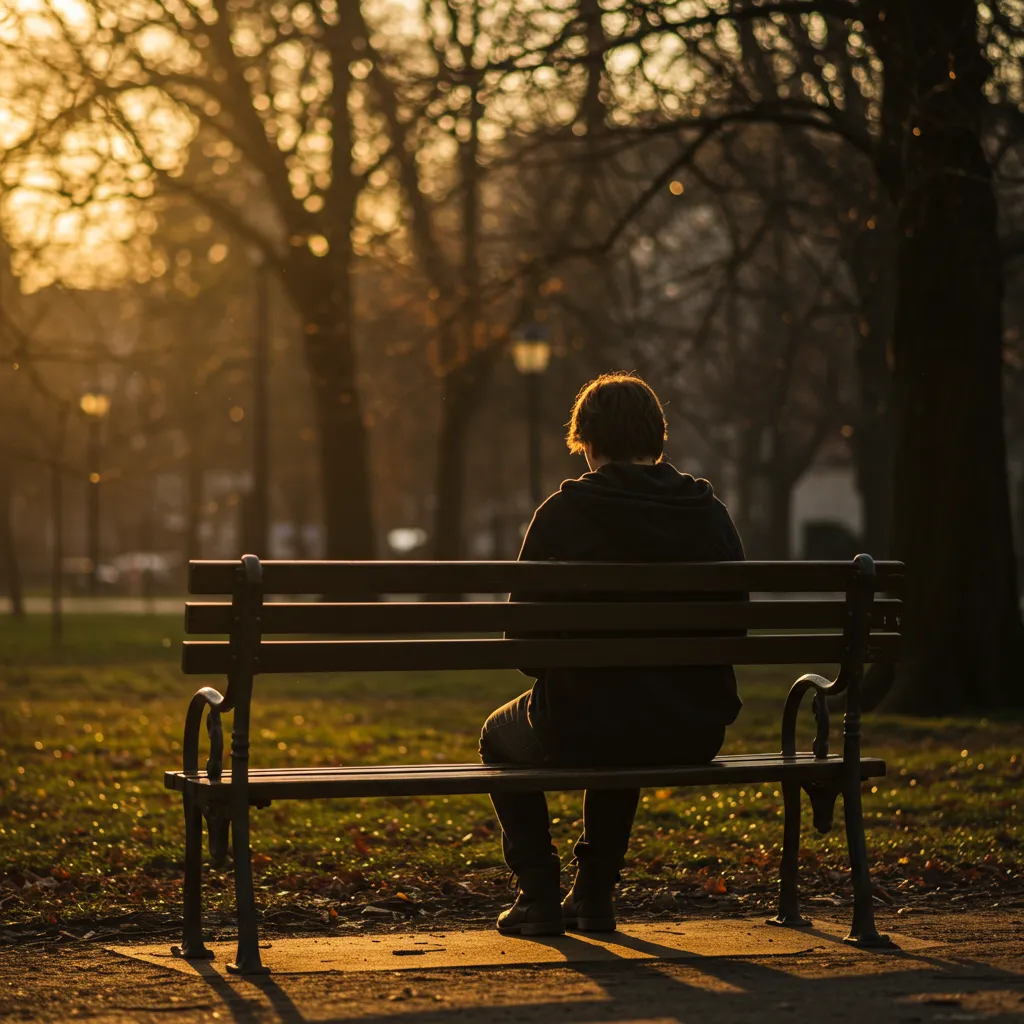
Fear of Being Alone
Learning to Feel Safe in Your Own Company
There’s a quiet fear many people carry
and we don’t talk about it much.
The fear of being alone.
Not dramatically alone.
Not forever-alone.
Just… alone with ourselves.
An empty house.
A quiet evening.
No messages.
No one to buffer the silence.
And suddenly something tightens inside.
But here’s what I’ve gently learned both personally and in the people I work with:
Most of us aren’t actually afraid of solitude.
We’re afraid of what shows up when there’s no one else there to soften it.
So let’s slow this down.
And approach it kindly.
Not as a flaw.
But as a nervous system asking for safety.

First, a softer reframe
Fear of being alone usually isn’t about being physically by yourself.
It’s often about:
feeling unseen
feeling unprotected
being left with your own thoughts
the quiet belief: “If I’m alone, something must be wrong with me.”
Nothing is wrong with you.
Your body simply learned, at some point in life:
connection = safety
Of course it clings to people.
That’s not weakness.
That’s biology.
Loneliness vs. aloneness
This visible difference changes everything.
Loneliness → feeling emotionally disconnected (this can happen even in relationships)
Aloneness → simply being physically by yourself
You’re not trying to love isolation.
You’re learning something gentler:
how to feel safe in your own company.
That’s a completely different skill.
Start with the body, not the mind
When fear of being alone hits, trying to “think positively” rarely works.
Because this fear doesn’t start in the mind.
It starts in the nervous system.
So we begin there.
A 5-minute grounding practice
Sit or lie down
One hand on your chest. One on your belly.
Breathe in through your nose for 4.
Out through your mouth for 6.
Longer exhales tell the body: we’re safe.
Then silently say:
“Right now, I am safe.”
Not forever.
Not tomorrow.
Just right now.
That’s enough.
Do this before trying to change any thoughts.
Safety first. Insight second.
Create “anchored aloneness”
This part is key.
Don’t jump into sudden isolation.
Build small, predictable, contained moments of being alone.
Teach your body gradually.
Try:
• a daily 20-minute “me window”
• sitting alone at a café
• walking alone in nature
• being home with a candle, music, tea, or a book
• gentle evenings without screens
Nothing dramatic.
Just quiet companionship with yourself.
Over time your system learns:
“Oh… I can be alone and okay.”
That’s how trust grows.
Talk with the fear (don’t fight it)
Instead of pushing it away, get curious.
Journal:
When I am alone, I am afraid that ______.
Then ask:
What do you need from me right now?
The answers are rarely “find someone.”
They’re usually:
• reassurance
• structure
• warmth
• comfort
• care
• consistency
The fear isn’t asking to be eliminated.
It’s asking to be tended to.
Replace abandonment with self-attachment
This shift is subtle. And powerful.
Instead of:
“Who will be with me?”
Practice asking:
“How can I stay with myself?”
Tiny actions matter more than big ones:
• speak kindly to yourself out loud
• keep regular meals
• sleep enough
• move your body
• drink water
• follow through on small promises
Trust grows from consistency.
Every time you show up for yourself, you send a message:
I’m not leaving you.
And something inside relaxes.
Where this fear often begins
Not to blame.
Just to understand.
Fear of being alone sometimes connects to:
• emotional inconsistency growing up
• sudden losses or separations
• love that felt conditional
• relationships where closeness could disappear quickly
Your system adapted to survive.
It made sense then.
You don’t have to relive the past.
Just gently honor:
Of course I learned this.
Compassion heals faster than analysis.
When fear spikes suddenly
Here’s a simple reset I love.
A small “come back to now” ritual:
Name 5 things you see
Touch something solid
Say your name + today’s date out loud
It sounds simple, but it anchors you in the present.
And the present is almost always safer than the story.
A truth to hold softly
Being alone does not mean you are unloved.
It doesn’t mean forgotten.
It doesn’t mean unwanted.
Sometimes it simply means:
you’re learning how to be your own safe place.
And strangely…
that’s what makes healthier connection possible later.
Because when you don’t need someone to rescue you,
you can choose them.
And chosen love feels very different.
Much calmer.
Much steadier.
Much freer.
A gentle reflection
Complete this sentence:
“When I feel safe being alone, I am free to ______.”
Rest.
Create.
Dream.
Listen.
Be myself.
Let your answer surprise you.
