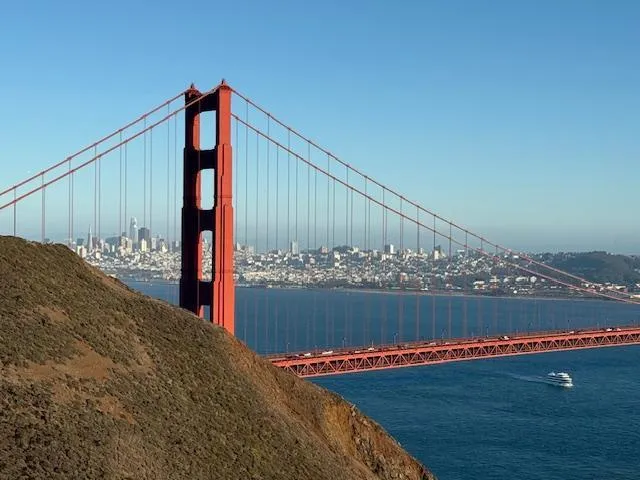
The Golden Gate
The Golden Gate
There are places we know long before we meet them.
The Golden Gate Bridge was one of those for me.
I had seen it for years — in movies, in shows, in photographs that felt almost symbolic. It was always there in the background: a steady structure, a marker of place, something that suggested arrival and departure at the same time.
Sometimes framed by a clear blue sky.
Sometimes half-visible, emerging from fog.
Always present, even when partially hidden.
And yet, until last year, I had never seen it in real life.
When I finally arrived in San Francisco, there was a quiet familiarity mixed with surprise. The bridge was exactly where it was supposed to be — and nothing like an image at the same time. Bigger. Colder. Louder. More alive.
I touched it.
That felt important.
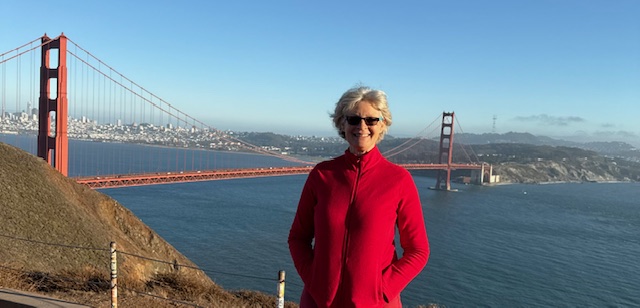
Not just seeing it, but standing close enough to feel the metal beneath my hand, to hear the wind move across it, to notice how solid it felt while everything around it shifted. I spent an entire day there and took hundreds of photos — in sun, in rain, in fog so thick the bridge disappeared and then slowly returned again.
Each time it reappeared, it felt new.
What struck me most was not how dramatic the bridge was, but how steady. The Golden Gate doesn’t try to be anything other than what it is. It doesn’t resist the fog. It doesn’t demand clarity. It stands, allowing the weather, the light, the seasons to move through it.
That steadiness is what draws people in.
I met travelers from Norway, from the Midwest, from Asia — all of us gathered there for the same reason, cameras in hand, quiet awe on our faces. Different languages, different lives, yet pulled toward the same structure. Not just to document it, but to witness it.
There is something grounding about a presence that remains while everything else changes.
Watching the fog roll in and out, I realized how much the bridge mirrors something internal. We often believe we need to be fully visible, fully clear, fully certain to be real or worthy. The bridge offers another truth: you can be partially seen and still be whole. You can be obscured and still be standing.
Some days, the Golden Gate is unmistakable.
Other days, it’s only hinted at — a suggestion through mist.
Both are true versions of it.
I learned something there about patience. About allowing experience to unfold without rushing to capture or explain it. About how touch — physical presence — changes understanding in a way images never can.
I also noticed how much longing there was in me when I left. Knowing I’ll return in a couple of months carries its own quiet comfort. Some places don’t need to be consumed all at once. They wait.
The Golden Gate doesn’t ask you to cross it to be moved by it.
It doesn’t ask for interpretation.
It simply stands.
And somehow, that’s enough to remind us that we can too — even when conditions shift, even when visibility comes and goes, even when the moment isn’t clear.
Some structures don’t teach us by changing.
They teach us by remaining.
